

What Is a Strut Spring Compression Tool?
A strut spring compression tool is a specialized mechanical device engineered to safely compress high-tension coil springs on vehicle suspension assemblies. Essential for servicing MacPherson strut systems and replacing strut cartridges, this tool controls the immense energy stored within vehicle springs, allowing technicians to disassemble suspension components without risk of sudden kinetic discharge.
Purpose and Importance in Suspension Repair
Vehicle coil springs sustain thousands of pounds of pressure to support vehicle mass and absorb road impacts. Performing a shock absorber replacement or strut overhaul requires safely neutralizing this tension.
- Component Disassembly: Compresses the spring to allow safe removal of the top strut mount, bearing plate, and center damper.
- Precision Reassembly: Keeps the spring securely compacted while fitting new coil over shocks or replacement cartridges.
- Structural Protection: Prevents uneven force distribution, safeguarding delicate strut threads and surrounding suspension hardware.
How a Coil Spring Compressor Works
A coil spring compressor uses mechanical advantage via heavy-duty threaded lead screws and precision jaws to pull spring coils closer together.
- Jaw Engagement: Precision-molded hooks grip opposing sides of the coil spring.
- Controlled Tension: Operating the threaded rod using a hex head or square drive gradually contracts the spring height.
- Stabilization: Integrated safety rings and locking pins secure the compressed spring in place, isolating its energy from the central strut assembly.
Safety Risks of Uncompressed Coil Springs
Servicing a heavy duty suspension without a specialized compressor creates extreme shop hazards. Uncontrolled coil spring release carries severe consequences:
- Explosive Kinetic Force: A released spring can launch with thousands of pounds of instant force.
- Severe Injury Risk: Uncontrolled spring expansion poses lethal collision hazards to technicians and shop personnel.
- Equipment Destruction: Projectile springs can shatter surrounding components, tools, and garage structures.
Types of Strut Spring Compression Tools
Choosing the right strut spring compression tool depends on your workspace, vehicle type, and service frequency.
Manual Bolt-Type Spring Compressors
Manual bolt compressors feature two threaded steel rods with dual hooks that attach directly to opposite sides of a spring.
Operation: Tightened manually using hand tools with a standard hex head or square drive socket.
Best For: Home mechanics handling occasional MacPherson strut servicing and standard compression spring types on light passenger vehicles.
Key Feature: Highly portable, budget-friendly design that fits easily into a toolbox.
Hydraulic Strut Spring Compressors
Hydraulic compressors utilize a foot pedal or hand lever to drive a fluid-powered ram, rapidly compressing the coil.
Operation: Uses fluid pressure to compress high-rate coils with minimal physical effort.
Best For: High-tension setups, stiff coil over shocks, and heavy duty suspension systems.
Key Feature: Speeds up labor times during routine shock absorber replacement while reducing mechanic fatigue.
Wall-Mounted and Bench-Mounted Units
Stationary compressors bolt permanently to a garage wall or secure tightly into a heavy table vise.
Operation: Secures the entire assembly vertically inside a rigid, heavy-gauge steel framework.
Best For: High-volume commercial repair shops servicing complex helical compression spring assemblies daily.
Key Feature: Built-in safety rings and locking arms prevent spring slippage under high loads.
Clam-Shell Style Coil Spring Tools
Clam-shell compressors enclose the spring within a wrapped, central locking mechanism rather than relying on separate side hooks.
Operation: Wraps fully around the outer coils to distribute clamping force evenly.
Best For: Precision cartridge replacement jobs where hook clearance is restricted.
Key Feature: Prevents individual coils from bowing sideways or popping free under compression.
Key Features and Advantages
Heavy-Duty Capacity and Construction Materials
A reliable strut spring compression tool must withstand massive mechanical forces without yielding. We build our equipment using drop-forged alloy steel and heat-treated acme threads to handle the intense tension generated by modern heavy-duty compression springs.
- Forged Steel Jaws: Eliminate flexing under load for consistent alignment on high-tension coils.
- Hardened Center Screws: Resist galling and stripping under high torque conditions.
- Corrosion Resistance: Durable powder-coated frames and black oxide hardware prevent wear in harsh shop environments.
Built-In Safety Hooks and Locking Latching Systems
Managing compressed coils requires absolute stability. Modern coil spring compressor units incorporate active locking mechanisms to prevent sudden spring dislodgement during maintenance.
- Adjustable Safety Bars: Lock the tool arms in parallel alignment to eliminate jaw spreading.
- Detent Locking Pins: Anchor the tool directly onto the spring wire for slip-free engagement.
- Controlled Thread Pitch: Ensures smooth, gradual energy release without sudden recoil.
Universal Jaw Designs for Broad Vehicle Compatibility
Versatility is essential for managing different compression springs across diverse automotive platforms, from compact passenger cars to light-duty trucks.
| Jaw Feature | Technical Advantage | Vehicle Application |
|---|---|---|
| Interchangeable Yokes | Accommodates spring diameters from 80 mm to 200 mm | MacPherson strut assemblies |
| Angled Pitch Ramps | Conforms precisely to tapered and conical coil profiles | Performance coil-over setups |
| Protective Jaw Liners | Prevents marring powder-coated spring surfaces | OEM shock absorber replacement |
How to Safely Use a Strut Spring Compression Tool
Required Safety Gear and Setup Precautions
Operating a strut spring compression tool requires strict attention to setup protocols. Always wear high-impact safety glasses and thick leather gloves to protect against high-tension energy release.
- Secure the Strut: Lock the MacPherson strut assembly tightly into a bench-mounted table vise. Never attempt compression while letting the strut rest loosely on the workbench or floor.
- Tool Inspection: Inspect the force screws, hooks, and safety rings for stripped threads, cracks, or metal fatigue before applying pressure.
- Workspace Setup: Clear your immediate zone of unnecessary tools and position yourself out of the top and bottom trajectory of the spring.
Step-by-Step Spring Compression Process
Follow these steps to safely handle a coil spring compressor on any standard suspension setup:
- Position the Jaws: Attach the compressor arms directly opposite each other (180 degrees apart). Engage as many coil turns as possible for maximum stability.
- Lock Safety Pins: Engage all built-in locking pins or safety rings onto the spring wire to prevent jaw slippage under load.
- Compress Alternately: Turn the drive bolt on each rod using a hand wrench on the hex head or square drive. Alternate 2 to 3 turns per side to maintain even, balanced compression force.
- Unseat the Spring: Continue compressing only until the coil separates cleanly from the top strut mount. Review our technical guide on strut spring compression to determine precise compression thresholds for heavy-duty setups.
Releasing Spring Tension Safely
Releasing tension requires equal precision to prevent violent spring expansion. Once you complete the shock absorber or cartridge replacement, gradually back off the tool.
Reverse the tightening process by turning each drive bolt counterclockwise in small, equal increments. Keep your body positioned away from the alignment axis of the strut until all tension dissolves completely. Once the spring sits seated firmly in its perch, unlatch the safety locks and remove the tool arms. For additional operational steps, review how to use a spring compression tool safely in high-load shop environments.
Common Usage Mistakes to Avoid
| Misstep | Risk | Prevention |
|---|---|---|
| Pneumatic Impact Wrench Overuse | Severe thread friction, galling, and sudden failure | Use hand ratchets or breaker bars on manual drive screws. |
| Uneven Load Distribution | Side-loading bends shafts and pushes spring outward | Alternate sides constantly, keeping side gaps equal. |
| Over-Compressing Coils | "Coil bind" severely damages spring steel and tool jaws | Stop turning as soon as the top mount clears the shaft. |
How to Choose the Best Strut Spring Compressor
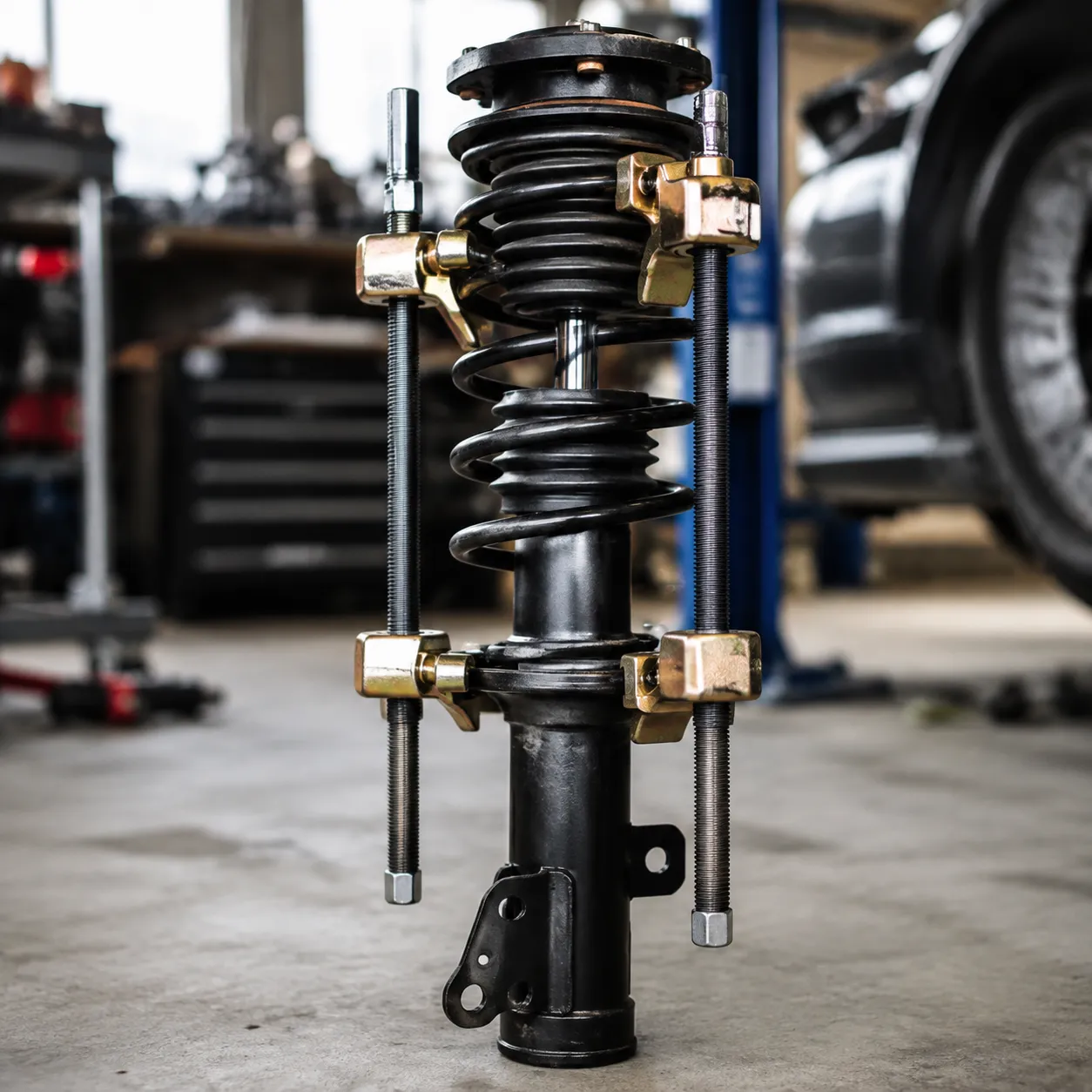
Picking the right strut spring compression tool comes down to your workload, vehicle type, and safety requirements. Whether servicing a daily driver or managing high-volume shop repairs, selecting the proper gear ensures safe and efficient spring servicing. For a deeper breakdown of models and safety specs, check our detailed spring compressor buying guide.
DIY Home Mechanic vs. Professional Garage Needs
Your project frequency dictates the style of coil spring compressor you need:
- DIY Home Mechanics: Portable dual-rod or clam-shell tools work best for occasional MacPherson strut overhauls in a home garage. They store easily and handle standard passenger cars.
- Professional Garages: Wall-mounted or hydraulic foot-pedal bench units are essential for daily shop use. They drastically reduce setup time and safely handle stiff, high-tension springs on trucks and SUVs.
| Feature | DIY Mechanic | Professional Garage |
|---|---|---|
| Tool Style | Manual bolt-type / Clam-shell | Hydraulic / Wall-mounted station |
| Usage Frequency | Occasional (1–2 times per year) | Daily / High-volume shop work |
| Speed & Effort | Manual ratcheting | Foot-pedal or pneumatic assistance |
| Storage | Compact, toolbox-friendly | Requires dedicated bench or wall space |
Weight Capacity and Spring Diameter Compatibility
Matching the tool to your vehicle's suspension specs prevents slippage and tool overload:
- Load Rating: Standard passenger cars require a capacity of at least 1,500 lbs to 2,200 lbs. Stiff truck springs and heavy duty suspension setups require commercial units rated for 3,500 lbs to 5,000+ lbs.
- Jaw Reach & Diameter: Ensure the tool hooks fit spring wire diameters ranging from 7/16" to 13/16" and coil outer diameters from 4" to 9". Universal adjustable jaws or interchangeable shoes offer the best versatility across various vehicle makes.
Build Quality, Warranties, and Price Points
Investing in solid materials guarantees long-term performance under high mechanical stress:
- Materials: Look for drop-forged alloy steel bodies equipped with precision Acme threaded center screws and heavy-duty hex head drives.
- Price Ranges:
- Entry-Level ($30 – $80): Basic manual 2-piece sets for light DIY maintenance.
- Mid-Range ($100 – $250): Heavy-duty clam-shell or portable hydraulic models.
- Professional Grade ($400 – $1,200+): Commercial hydraulic bench or wall-mounted stations.
- Warranty: Prioritize products backed by solid multi-year or lifetime warranties covering structural defects and thread wear.
Maintenance and Care for Spring Compressor Tools
Proper maintenance of your strut spring compression tool ensures shop safety and extends equipment life. As a professional mechanical springs manufacturer, we know firsthand the extreme pressure these tools handle when servicing a macpherson strut or heavy duty suspension system.
Inspecting Threads and Hooks for Wear
Routine physical checks prevent dangerous tool failures under high mechanical load:
- Thread Integrity: Inspect the main forcing screw for metal galling, stripping, or flattened threads. Damaged threads can slip unexpectedly during compression.
- Hook & Jaw Condition: Check safety hooks and jaws for micro-cracks, bending, or structural deformation. Discard any component showing visible metal fatigue.
- Retaining Hardware: Ensure all safety rings, locking latches, and roll pins operate smoothly and seat completely without slop.
Lubrication and Proper Storage Tips
Keeping your equipment clean and lubricated minimizes friction and extends service life:
- Grease the Forcing Screw: Apply extreme-pressure grease or anti-seize compound to the main threads and the hex head contact point before every use. Never drive spring compressor threads dry.
- Clean Tool Surfaces: Wipe away road grit, metal shavings, and debris after every job. Clean mating surfaces protect your gear just as proper material care preserves high-grade stainless steel compression springs.
- Dry Storage: Store your coil spring compressor in a dry, climate-controlled case or cabinet to prevent surface rust and pitting on precision threads and jaw hinges.
Frequently Asked Questions
Can You Compress a Strut Spring Without a Compression Tool?
No, you should never attempt to compress a MacPherson strut spring without dedicated tooling. Coil springs store an immense amount of potential energy under high tension. DIY makeshift techniques like using ratchet straps, wire, or standard clamps are unpredictable and extremely dangerous. Attempting a shock absorber replacement without proper equipment risks severe injury or property damage. For safe handling practices, always consult a proper guide on compressing strut springs before attempting suspension service.
Is It Safe to Use an Impact Wrench on a Manual Compressor?
In most cases, no. Standard manual bolt-type compressors are designed strictly for hand tools like a ratchet or breaker bar.
- Thread Damage: Powered impact wrenches generate violent torque that strips forcing screw threads, galling the metal.
- Slippage Risks: High-speed vibration can cause forcing hooks to walk or dislodge from the spring coils.
- Proper Drive Usage: Turn the hex head or square drive manually using steady, alternating turns on each side to keep tension balanced across the coil over shocks.
If you require impact-rated speed for a high-volume garage, step up to a shop-grade heavy-duty automotive spring compressor kit explicitly rated for air tools.
How Often Should a Coil Spring Compressor Be Replaced?
There is no fixed expiration date, but a coil spring compressor must be replaced immediately at the first sign of structural fatigue.
- Visual Defect Threshold: Replace the unit if you spot stripped or flattened threads, hair-line cracks on the hooks, bent main bolts, or damaged safety rings.
- DIY Inspection Standard: For home mechanics, thoroughly inspect the hardware and lubricate the main threads before and after every single job.
- Commercial Workshop Schedule: Professional shop units under daily load should undergo monthly structural inspections and full replacement every 12 to 24 months depending on duty cycle.


